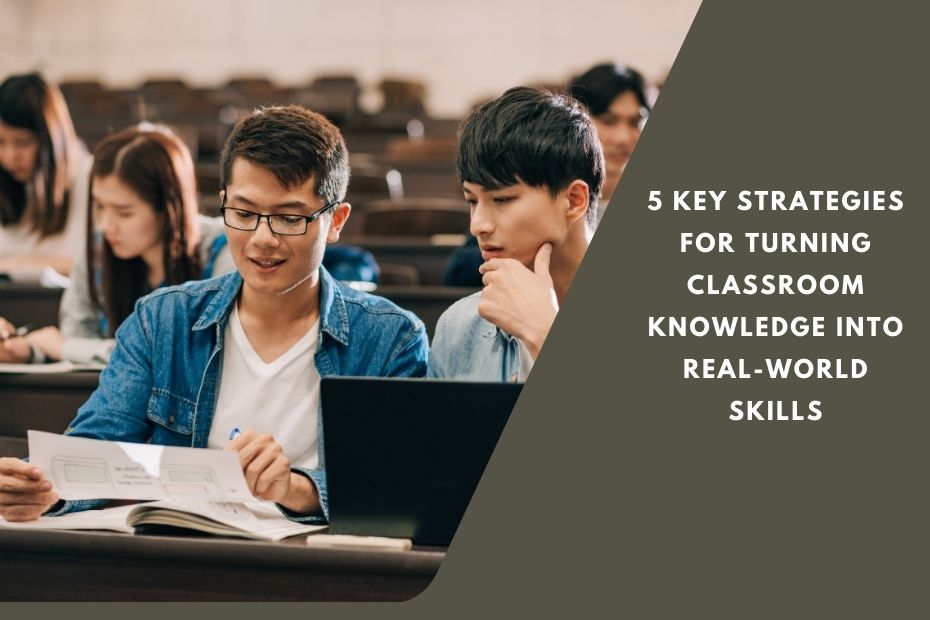
When you spend years in the classroom, absorbing facts, solving theoretical problems, and memorizing frameworks, it’s easy to assume that knowledge will naturally carry over once you enter the real world. But the truth is, it doesn’t happen automatically. Translating academic knowledge into practical, real-world skills takes deliberate effort. Whether you’re just out of university or you’re mentoring younger professionals, the key lies in bridging the gap between what you’ve learned and how you apply it. That process isn’t about throwing away the theory—it’s about learning how to make it work when the variables aren’t perfect and the outcomes actually matter. Let’s break down the strategies that can help you make that shift.
1. Treat Project-Based Learning Like Practice for the Field
You’ve probably had your fair share of team projects, capstone assignments, or semester-long deliverables. Most students treat those as academic hurdles—but you can treat them as training grounds. The best way to start applying what you’ve learned is by framing every academic project as a simulation of real-world work. That means setting goals, managing time, adapting to unexpected problems, and figuring out how to deliver something that has value beyond a grade.
You can take it a step further by using real-world data, consulting with local organizations, or building something that could actually be used. If you’re in business school, don’t just do a SWOT analysis—create a proposal a company could implement. If you’re in engineering, don’t just build a model—build something that could survive outside the lab. That mindset shift forces you to think more critically, adapt your methods, and start seeing your education as a toolkit, not a checklist.
2. Use Internships as Learning Labs, Not Resume Fillers
Internships often get treated like a requirement, but they’re far more valuable than a line on your CV. They’re your chance to experiment, observe, and learn how theory holds up in the messiness of real operations. You’ll see what real deadlines feel like, how teams handle pressure, and how companies make trade-offs that academic cases rarely touch.
The trick is not just showing up to do the tasks you’re assigned. Ask questions. Request feedback. Sit in on meetings that aren’t directly tied to your role. Watch how your coworkers communicate, solve problems, and manage expectations. Every organization operates differently, and the more environments you experience, the more you’ll understand how flexible your academic knowledge really is. And if you’re supervising interns yourself, encourage them to reflect on how what they’re doing connects back to what they’ve learned. That connection deepens understanding and builds confidence.
3. Practice Decision-Making Through Case Studies and Scenarios
One of the fastest ways to turn theory into practical skill is by using case studies or scenario-based exercises—especially when they’re open-ended. You don’t just memorize what happened. You analyze it, take a position, and defend a decision. That process forces you to take your classroom knowledge and run it through real variables: time pressure, incomplete information, stakeholder conflict, and unintended consequences.
If you’re in a leadership development setting or running a professional program, include role-playing scenarios that mimic complex, high-pressure decisions. Make people prioritize, explain trade-offs, and deliver a clear rationale. You’ll be surprised how often the “right answer” from a textbook doesn’t hold up when the details get messy. And that’s the point. Real-world skills come from learning how to navigate uncertainty—not avoid it.
4. Treat Collaboration as a Skill, Not a Default Setting
Working with others is baked into nearly every academic program. But most students approach group work like a logistical burden. If you treat collaboration as a technical skill—like writing or data analysis—you start developing it more intentionally. That means paying attention to how you communicate, manage tasks, and adapt when team dynamics shift.
Whether you’re leading the group or supporting a teammate, every project gives you the chance to practice collaboration in a meaningful way. How do you handle disagreement? How do you manage someone who isn’t pulling their weight? How do you give feedback that motivates instead of discourages? These are the kinds of challenges that show up in every industry, and the earlier you start developing strategies to handle them, the better prepared you’ll be when real pressure hits.
5. Take Every Opportunity to Apply What You Know Outside the Classroom
Classrooms are safe spaces to learn—but real skill-building happens when you push beyond them. Look for ways to apply your knowledge in student clubs, part-time jobs, volunteer projects, or freelance work. If you’re studying finance, offer to help a small nonprofit review its budget. If you’re learning design, volunteer to create graphics for a student org. If you’re in healthcare, look for shadowing opportunities or support roles in local clinics.
Every time you apply your skills outside of an academic setting, you learn what works and what doesn’t. You also gain confidence in adapting to new tools, environments, and expectations. And those experiences give you stories to tell in interviews, performance reviews, or networking conversations—because you won’t just be repeating what you learned. You’ll be proving how you used it to make something happen.
Key Tips to Apply Classroom Learning in Real Life
- Use real-world projects to simulate job challenges
- Treat internships as live learning environments
- Solve case studies to practice decision-making
- Build communication and leadership through group work
- Apply your skills in clubs, community work, or side gigs
In Conclusion
Turning classroom knowledge into real-world skill isn’t about abandoning theory—it’s about stress-testing it in places where the stakes are real. That shift happens through experience, reflection, and the willingness to mess up, learn, and try again. Whether you’re fresh out of school or looking to sharpen your edge mid-career, the same principle holds: knowledge matters, but what you do with it matters more. So find the projects, roles, and conversations that stretch you. That’s where the real growth happens.

Olivier Gillier is a global investment strategist and co-founder of RioBlanco Capital LLC, with over 20 years of experience in wealth management and international markets. A former Senior Vice President at Merrill Lynch, he now focuses on private equity, cross-border finance, and philanthropic initiatives worldwide.